

Empathy, Trust and AI
We’re always reminding ourselves of the most important aspect of filmmaking – the audience.
When we’re meeting with clients, we like to ask about who the film is for – it might be their social media followers, their donors, their trustees. It may be policy makers. We ask our clients – how do audiences feel about your campaign, your product, or your cause? What action do you hope they take?
It’s hard to ignore the impact AI is having right now. As filmmakers we’re asking ourselves how do we approach this era of AI? There’s no doubt the efficiency that it brings, and as a small team we have to be smart with how we use our time. Anderson and I handle everything from sales and marketing to post-production. I also work in charity marketing, and Anderson runs a film collective and a Youtube channel. And we both have families too (I’ve been helping out with potty training between writing proposals this week). So there’s no doubt that AI can make things a bit easier for us.
It astounds me how generative AI is being used these days – Supplements brand IM8 released an ad last year featuring co-founder and former Preston North End loanee David Beckham, and the ad was entirely AI generated. You wouldn’t really be able to tell.

There are now apps out there that can generate customer testimonials for your business. You can imagine how enticing this can be, if you’ve just started a business and for £10 you can generate 2 months of social content. What’s not to love?
At Jeruty Films, we primarily work with charities & third sector organisations. It’s an incredibly difficult time right now for charities. There is a crisis within charity retail. 1 in 7 charities face permanent closure. I’ve been attending Charity Freelancer Chat meetups for a while now, and we’re always discussing how difficult a time it is for charities right now. More and more people are now starting to looking for work in different sectors.
Yes, charities can utilise AI to ease their workloads. But they must be cautious in their approach, because their organisations are built on trust. A report released earlier this year from the University of East Anglia warned charities against the ‘AI shortcut’ to empathy. Personally, when I see generative AI now I totally switch off. I might head to the comments to see all the ‘AI slop’. And let’s not ignore the amount of energy AI is using.
We’re also at a really interesting time where authenticity in storytelling can be powerful for audiences. Something filmed on a phone can do more for a brand than a five-figure ad campaign. For me, it always comes back to empathy. Empathy is a powerful tool for charities – it can help create awareness, it can lead to donations. At Jeruty Films, we love documentaries. We love to do interviews. Someone telling their own story, in their own words, without a script, can be so powerful. If someone is watching your film, and they question whether a person on screen is genuine – will they start to question your organisation? Your cause?
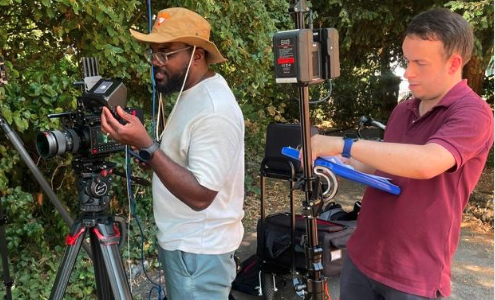
We’re not here to tell people how to use (or not use) AI, or specifically generative AI. There are some great guidelines out there for how you can approach AI for your organisation.
But if we were to give any advice, it would be to always have your audience as a top priority. At Jeruty Films, we focus on the real stories. Whether that’s for a client, or a short film we’re screening at a festival.
If we’re putting our audience to one side, why are we doing any of this?
Andy
Producer at Jeruty Films




Pingback: 10 ways charities can utilise video when cash is tight - Jeruty Films