

10 ways charities can utilise video when cash is tight
It’s tough times right now for charities here in the UK, and as effective as video can be, it can also be a costly resource. We love working with charities not just to create videos with them, but to think strategically about video. Here are ten tips on how to utilise video when budgets are tight!
-
User-generated content
User-generated content, or UGC, can be a powerful – and authentic – way of amplifying the voices of your service users to your audiences. Giving them a quick brief, asking them to explain how your charity has changed their life, can give you a 20-30 second video which will move donors as much as a high-production film would.
-
The power of phone filming
Continuing on from UGC, there are so many ways of creating powerful video content with your phone. From BTS content, to fun ‘Meet the team’ interviews, to timelapses of a charity gala being setup, you can make short and engaging content without spending anything.
-
Dip into the photo and video archives
Charities often have lots of old photos and video to draw from, and these collections can really paint a picture of the impact your charity has had over the years. Putting together a simple slideshow with a friendly voiceover is a great way of utilising your archives.
-
Reuse old videos…but check permissions first!
Have you commissioned a production company to make a film for your charity in the past? Have a look and remind yourself of what you’ve previously published. You may find a film which still has relevant messaging, and it’s easy enough to change CTAs by adding a slide over the top of the ending in Canva (if the original CTA is now irrelevant). Just check that the people featured in the video have allowed you to republish it. If you’re conscious about using old content, you can always put a ‘From the archives’ label on it!
-
Micro animated shorts using Canva
Canva is a video and design software. It’s actually free for charities (find out how to get your free account here). It’s fairly easy to create videos with text, graphics and simple animations. You could create a series of ‘Did you know’ videos using Canva to bring awareness to your cause.
-
Public domain footage
If you don’t hold much footage in your archives, there is public domain and stock footage you can use to create videos. Websites like Pexels allow users to download video footage and photos donated by filmmakers and photographers.
-
Screen recording guides
A screen recording can go a long way. Is it obvious to your users how to donate, or how to use one of your services or resources? Record your screen and add a voiceover using Canva, and help your users to understand your website a little better.
-
Interviews over zoom
If you can’t commission a film company to film an interview, capturing a interview over Zoom is the next best thing. It’s easier to organise, and allows the contributor to stay in comfort of their own home. We run a service called Screen Stories, where films are created entirely from Zoom recordings.
-
Make the most of capturing an interview
If you’ve commissioned a production company to capture an interview (or if you’re interviewing over Zoom), make the most of that opportunity. Capture content that isn’t just for the video you’re creating, but think about your upcoming content needs. Asking them to say thank you to donors, touching on specific moments in the year (awareness days, Christmas and other religious festivals) means that this footage can be used further down the line.
-
When you do have a budget, make your video evergreen!
If you’ve got budget to create a video, that’s great! Now consider how you can make the video evergreen. Try to avoid dating the video, soit can have the same impact if you post it again in the future.
You may have noticed we haven’t mentioned using regenerative AI. Whilst we understand the cost-saving element of using AI, we encourage charities to consider how audiences might feel about AI photos and videos being used to promote your cause, and if it can create more harm than good. You can read our thoughts about trust and AI in a blog we wrote a few weeks ago.
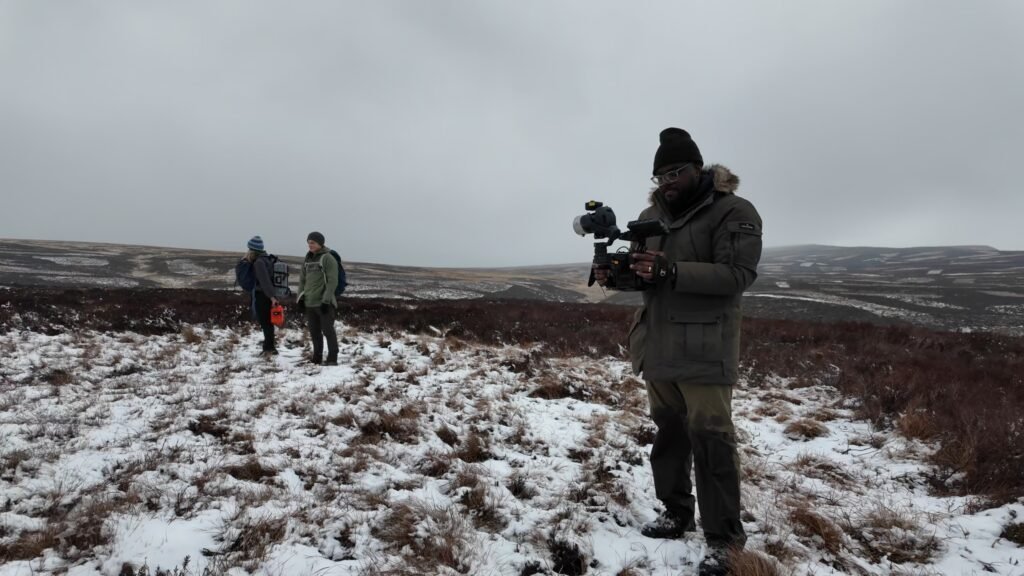
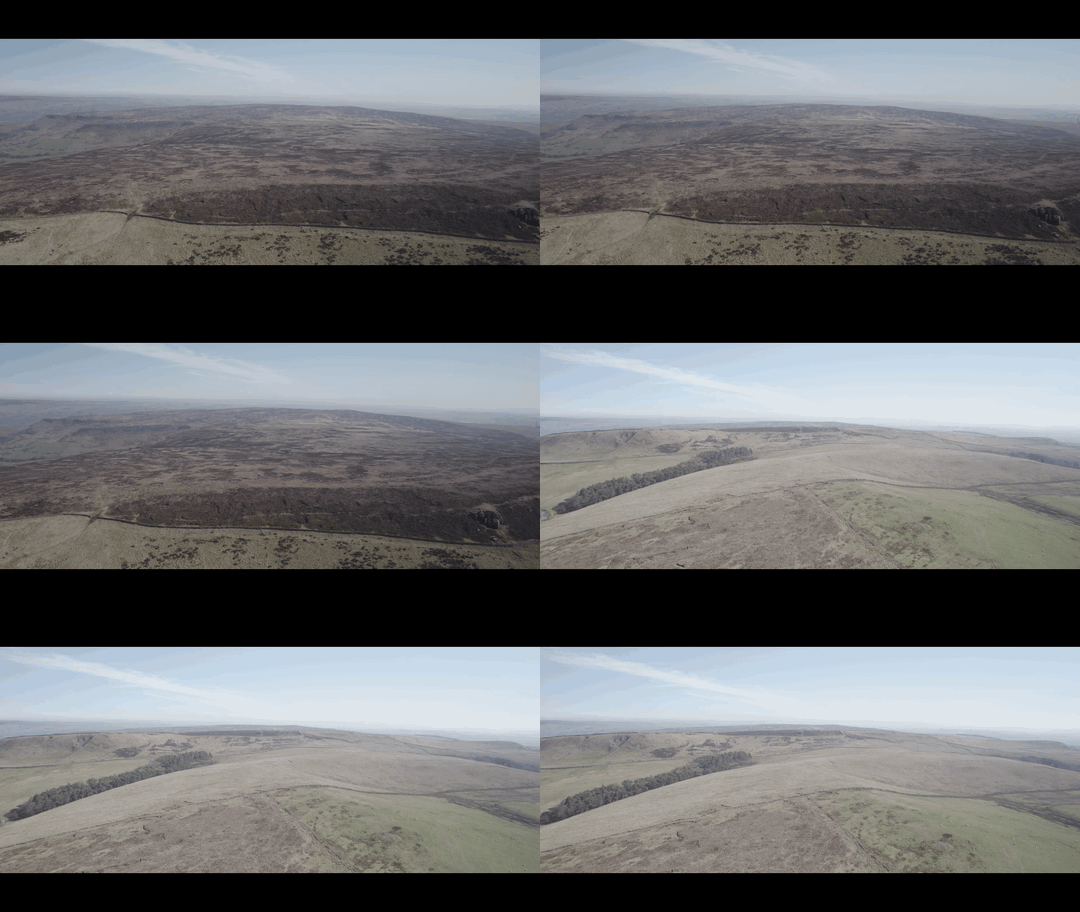
Following that process from a film perspective has to be one of my recent highlights.
When you hide behind a desk or a sterile setup, you lose that real-world connection. Audiences want to see real people doing real work. Capturing genuine effort in real weather proves your impact in a way a quiet office setup never could.
Capturing the Human Element in the Cold
Filming on the Moors after heavy snow means you better make sure you bring your all-weather gear. But there’s something special about being out in the cold with people who love doing what they do, capturing the smiles, the camaraderie, and the hard graft.
They were out there braving the elements and doing whatever good they could to help the area, so the least we could do as filmmakers was capture that process with as much detail and care as possible. This is what makes us human, and capturing these moments is a pleasure. And let’s be honest, even on a snowy, overcast day, the Peak District is still one of the most beautiful places you could be.
Gear & Preparation
I do a decent amount of hiking with my Pathfinder Club (we are a bit like Scouts), and having the appropriate gear, water, and a map is required at all times. I apply that exact same rule to filming out in the elements and in remote locations:
- Never go solo: Try to have someone with you on location; a twisted ankle whilst walking hiking by yourself could be fatal in the wrong conditions.
- Pack light but complete: Pack a lightweight camera package that includes everything you need. After all, you have all that weight on your back for hours.
- Stay fuelled: Make sure you have water and try to pack a little snack.
- Power up: Bring more batteries than you think you need; the cold drains them fast.

